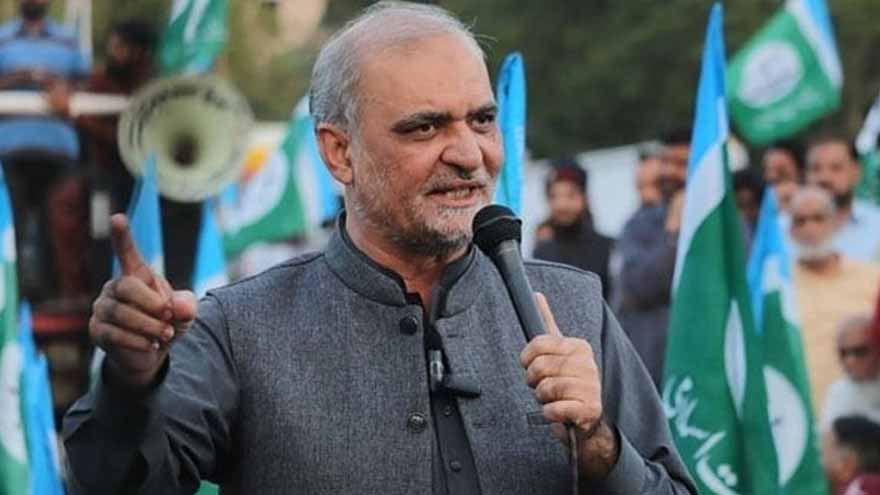
LAHORE – Jamaat-i-Islami (JI) Emir Hafiz Naeemur Rehman has declared a nationwide strike on September 3 to protest the petroleum levy, escalating the party’s campaign against rising living costs and warning that demonstrators could march on Islamabad if the government fails to deliver relief.
Speaking to supporters at the JI sit-in outside the Punjab chief minister’s residence in Lahore, Rehman accused the government of shifting the burden of inflation onto the public while increasing its own expenditures. He said the protest movement had expanded beyond three cities, with demonstrations and sit-ins now underway across different parts of the country.
Call for Traders to Join the Strike
The JI chief urged party workers and supporters to intensify their campaign and called on traders to participate in the September 3 strike, describing it as a measure to protect public rights. He stressed that the strike would remain peaceful, but warned that the government would have to address the people’s demands.
“This is not a political game. It is a fight for the survival of ordinary Pakistanis,” Rehman said. “If the government does not listen, we will take our protest to the capital.”
Demands: Petroleum Levy, IPPs, and the Flour Mafia
Rehman outlined the core issues driving the JI movement, including the petroleum levy, agreements with independent power producers (IPPs), and what he termed the flour mafia. He demanded the immediate withdrawal of the petroleum levy and an end to what he described as unfair IPP agreements that have burdened consumers with excessive electricity costs.
- Withdrawal of the petroleum levy on fuel products
- Termination of unjust IPP agreements
- Reduction in electricity and petrol prices for traders
- Action against the flour mafia responsible for price manipulation
Rehman noted that the party’s earlier protests had already resulted in some relief in electricity prices, and he urged the government to extend similar relief to petroleum products. “When the people stand together, the government is forced to act. We saw it with electricity. Now we demand the same for petrol and diesel,” he said.
Criticism Over PIMS Tragedy
The JI leader also criticised the government over the recent tragedy at the Pakistan Institute of Medical Sciences (PIMS) in Islamabad, blaming alleged administrative failures and negligence for the deaths of children. He questioned whether doctors and paramedical staff had received adequate training to respond to emergencies and disasters.
“How many more children must die before the system is fixed?” Rehman asked. “We need a stronger disaster-response training system across the country, not just committees that produce reports.”
He also questioned the decision by PIMS to form a separate committee to investigate the incident after the prime minister had already constituted an inquiry panel. Rehman demanded a comprehensive investigation, saying the issue should not be settled merely by suspending one official.
State Responsibility and Public Rights
Rehman said the ongoing sit-in and protest campaign were aimed at securing the rights of Pakistan’s citizens. He maintained that the state was responsible for providing basic rights and services, but successive governments had instead increased the burden of taxation on the public while failing to deliver essential relief.
The September 3 strike is expected to test the JI’s mobilisation capacity and could signal a new phase in the party’s confrontation with the federal government over economic policy and governance failures.