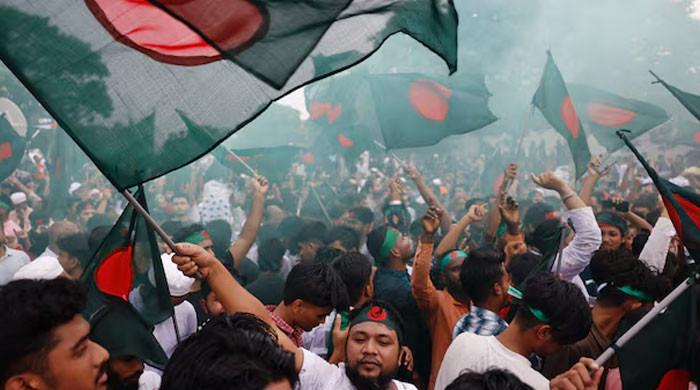
In Dhaka, a new political era is unfolding with a clear message for its powerful neighbors: Bangladesh’s national interests come first. The emerging foreign policy doctrine under Prime Minister-elect Tarique Rahman emphasizes sovereignty and balanced relations, moving beyond historical alignments with either India or Pakistan.
A Call for Balanced Partnerships
The sentiment on the ground reflects a desire for equitable ties. “We want equal and better relations with both Pakistan and India. Both of you treated us in similar ways,” a young Bangladeshi noted, capturing a widespread public mood focused on moving forward from past grievances while acknowledging shared history.
India’s Strategic Recalculation
India, which shares a 4,096-kilometer border and 54 rivers with Bangladesh, is navigating the consequences of its previous policy. Having heavily backed the former Awami League government, New Delhi now recognizes the new political reality represented by the Bangladesh Nationalist Party’s (BNP) mandate. With bilateral trade between $14-16 billion, India is actively working to rebuild diplomatic bridges.
When questioned about potential demands for the extradition of former Prime Minister Sheikh Hasina, Tarique Rahman responded with judicial caution, stating, “That depends on the judicial process,” demonstrating a measured approach to politically sensitive issues.
Pakistan’s Diplomatic Opening
Conversely, Pakistan finds renewed diplomatic space in Dhaka. Public sentiment toward Pakistanis is notably warm, a shift attributed to consistent diplomatic outreach. Bilateral trade, currently around $865 million, is a focal point for expansion alongside deeper social ties.
Personal stories underscore this connection. Afroza Begum, daughter of a Pakistani Air Force officer, reminisced about her childhood in Rawalpindi and Karachi while visiting a Peshawari restaurant in Dhaka, stating, “We came from Pakistan in 1974, but our hearts still remain there.”
The “Bangladesh First” Vision
At the core of the new leadership’s agenda is a domestic and foreign policy centered on national priorities. Rahman’s approach avoids populist rhetoric against opponents and seeks internal reconciliation, including outreach to figures from Jamaat-e-Islami and the National Citizens Party.
Externally, the vision extends to regional cooperation. Rahman has committed to reviving the South Asian Association for Regional Cooperation (SAARC), an initiative originally championed by Bangladesh. “We will work to reorganise SAARC and will talk to our friends, after forming the government, as it was our initiative,” he announced.
A Regional Crossroads
This recalibration presents a challenge and an opportunity for both India and Pakistan. Bangladeshi policymakers urge their neighbors to view the country not through the lens of their bilateral rivalry, but as an independent actor. The hope in Dhaka is that a revitalized SAARC could transform the region from a theater of competition into a hub of cooperation, with Bangladesh playing a central, sovereign role.