Emotional Reunions on the Tarmac After a Week of Conflict
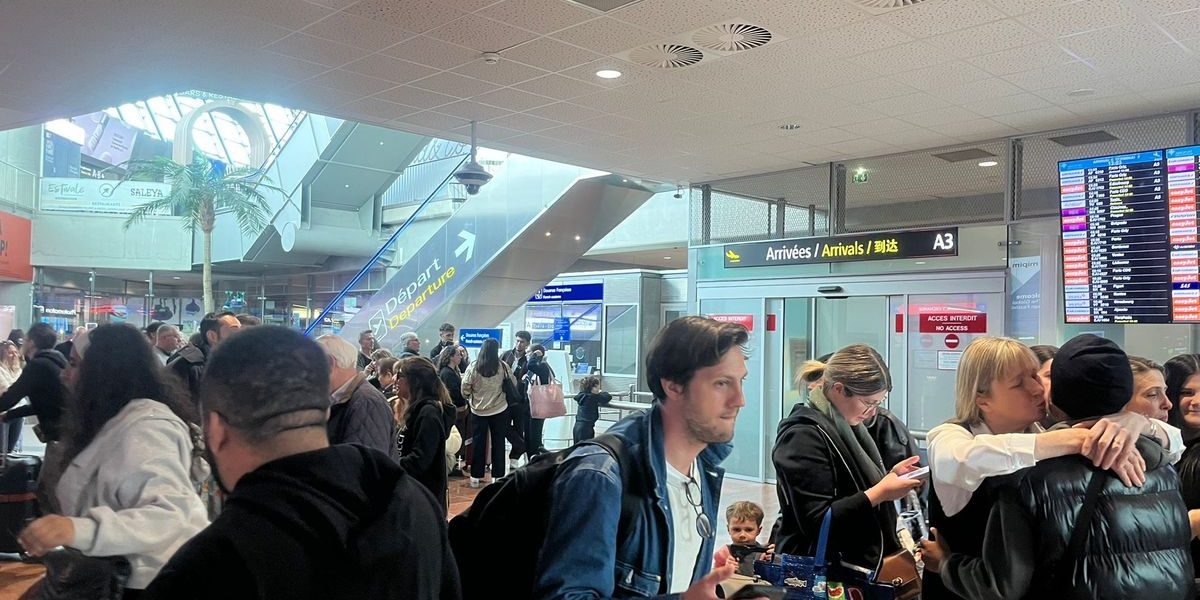
Air traffic between Dubai and the Côte d’Azur resumed on Sunday, March 8, after a total one-week suspension due to the escalating conflict in the Middle East. The sight of an Airbus A380 touching down at Nice Côte d’Azur Airport at midday marked a tense homecoming for 360 passengers, predominantly residents of the Riviera region who had been stranded in the United Arab Emirates.
The relief of return, however, was heavily overshadowed by the trauma of the preceding days. Passengers described a sudden descent into chaos. “We were caught completely off guard. It was truly horrific—the alarms… Just thinking about it gives me goosebumps,” said Marie-Laure, a mother of four from Cannes, who was still visibly shaken.
“I Will Never Leave Europe Again”: Lasting Trauma for Families
For many, the experience has fundamentally altered their perception of travel. Mélodie, a Nice resident traveling with her 7- and 11-year-old children, recounted the sounds of conflict: “Boom, boom, boom… ‘Move away from the windows!’ That’s what we heard.” She declared, “It’s over. For the rest of my life, I will not leave Europe.”
The emotional toll extended to families awaiting their loved ones. In the arrivals hall, Sophie, Mélodie’s mother, could not hold back tears after a sleepless night tracking the 4 a.m. departure from Dubai, consumed by anxiety for her family in a conflict zone.
Controversy Erupts Over “Shameful” Empty Seats on Repatriation Flight
Beyond the emotional distress, a significant controversy has erupted regarding the management of the repatriation efforts. While hundreds of passengers reported extreme difficulty securing a return ticket, Sunday’s inbound flight from Dubai was only 70% full, leaving over 150 seats empty.
“The plane was empty. People were sleeping stretched across rows because there was so much space,” Mélodie denounced. “It’s shameful that there were so many free seats while we were fighting to get home.”
The contrast was even starker for the outbound flight from Nice to Dubai just hours later, which carried only 80 passengers—a nearly empty aircraft underscoring that while Riviera residents are rushing back, almost no one is currently willing to fly toward the Middle East.
A Symbolic Return Amid Ongoing Tension
The resumption of this key air link signals a fragile return to normalcy but lays bare the deep scars left by the conflict. The combination of passenger trauma, logistical failures leading to “ghost planes,” and a collapsed demand for travel to the region paints a complex picture of recovery, where physical routes may reopen long before a sense of security returns.