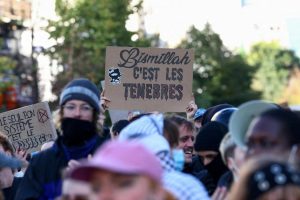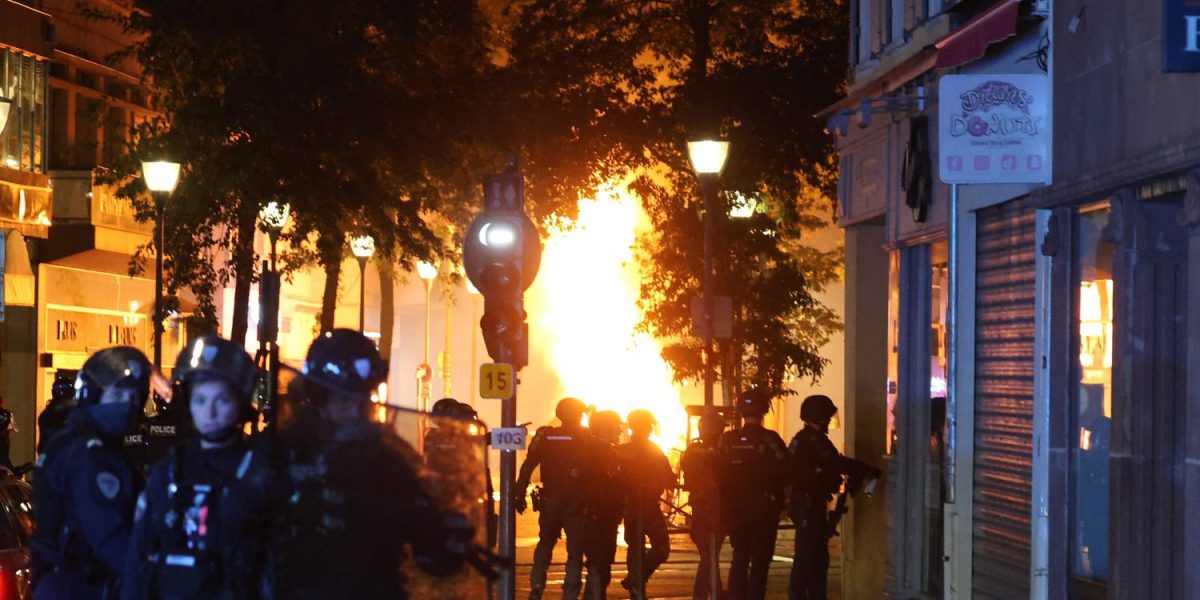
Broken shop windows, burning barricades and clashes with riot police. The scenes that gripped France on 17 and 18 October are now being replicated in several European countries, raising the question of whether the anger of French youth is inspiring a continent-wide wave of protest.
Italy: “Let’s Do Like in France”
On Saturday 17 October, a demonstration against the high cost of living in Milan degenerated in the city centre. Groups of young people, many of them minors, broke away from the procession to attack shops and police. Similar scenes were observed in Turin and Bologna. In Milan, around 5,000 people had joined the mobilisation, and around fifty were arrested.
Italian Prime Minister Giorgia Meloni condemned the violence on social media. “Protesting is a right. Setting our cities on fire is not,” she declared, calling on opposition parties to condemn the damage without ambiguity.
Behind the clashes are grievances that echo those expressed in France: purchasing power, wages deemed insufficient, fuel costs and funding for public services. Some Italian protesters openly claim the influence of the French movement. Since the start of October, high-school students have taken up the slogan “Facciamo come in Francia” — “Let’s do like in France”.
Greece and Belgium: Housing and Tuition Costs
In Greece, students are mobilising against the high cost of living and difficulties in accessing housing. Some display slogans in French as a sign of solidarity with French high-school students.
In Belgium, high-school and university students in Brussels and Liège are denouncing rises in university enrolment fees. Saturday’s gatherings were marked by clashes with police. In Brussels, officers used tear gas to disperse groups of young people throwing projectiles. Vehicles and street furniture were set on fire, and around ten arrests were reported in the capital.
Albania: The “Pink Flamingo Revolution” Turns Violent
Not all of these mobilisations were born in the wake of the French protests. Some began weeks or even months earlier. In Albania, the “Pink Flamingo Revolution” dates back to 31 May, when it was sparked by a luxury tourist complex project linked to Jared Kushner, son-in-law of US President Donald Trump, in a protected natural area on the Albanian coast. Environmental defenders denounced the potential impact on natural habitats, notably those of pink flamingos.
Over the months, the demands widened to include corruption, economic inequality, education conditions and the difficulties young people face in building a future in the country. Since Tuesday 13 October, the mobilisation has turned far more violent. In the capital, Tirana, official buildings have been set on fire and repeated clashes have pitted protesters against police, who have used tear gas, water cannon and rubber bullets. Seven officers have been suspended in disciplinary investigations over alleged excessive use of force. Protesters now demand the resignation of Prime Minister Edi Rama, in power since 2013, who refuses to step down and accuses foreign actors of seeking to destabilise the country without providing public evidence.
Social Media as an Accelerant
How can mobilisations with such different origins present such striking similarities? For Robi Morder, a sociologist and president of the Group for Study and Research on Student Movements (GERME), the circulation of information plays an essential role.
“At a time when the circulation of information is facilitated and accelerated by social media, it is not surprising that mobilisations taking place in one country are known and inspire movements in others,” he told franceinfo.
Images of clashes, slogans and demands can now cross borders within hours, and protesters discover that young people in other countries sometimes express similar concerns. Yet it would be misleading to present these movements as a single European revolt. The causes remain specific to each country: purchasing power in Italy, the cost of studies in Belgium, access to housing in Greece, and corruption and the future of young people in Albania. It is an anger that does not necessarily recognise borders.