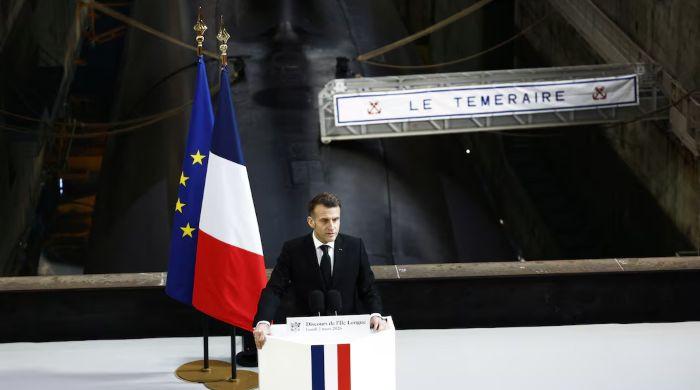
In a landmark speech signaling a historic pivot in European defense policy, French President Emmanuel Macron announced plans to expand France’s nuclear arsenal and deepen cooperation with European allies on nuclear deterrence. The move, delivered from a submarine base in Brittany, responds to what Macron termed a “period of geopolitical upheaval fraught with risk.”
A New Era of European Strategic Autonomy
While France and the United Kingdom are Europe’s only nuclear powers, the continent’s security has long rested on the American nuclear umbrella through NATO. Macron’s new doctrine, a formal update to France’s strategic posture, directly challenges that decades-old reliance. The announcement follows growing European anxiety over the United States’ commitment, particularly in light of former President Donald Trump’s foreign policy stance.
“We are currently experiencing a period of geopolitical upheaval fraught with risk,” Macron stated, arguing that a “hardening of the French deterrence model was needed.”
Building a European Nuclear Dialogue
The cornerstone of the new policy is unprecedented openness. Macron confirmed that several European allies—including Germany, Poland, the Netherlands, Belgium, Denmark, Greece, and Sweden—would be invited to participate in French nuclear wargames. “I believe I can say our partners are ready,” he said.
In a significant bilateral development, Germany and France have established a nuclear steering group. German Chancellor Friedrich Merz confirmed the group would begin concrete cooperation this year, involving German conventional forces in French nuclear exercises and joint visits to strategic sites.
Forward Deterrence and Arsenal Expansion
Macron outlined a new “forward deterrence” doctrine, suggesting that under certain circumstances, French strategic assets, including aircraft, could be deployed to other European nations. “Our strategic air forces could be spread deep into the European continent,” he explained, though he provided no specific details on potential host countries.
Concurrently, Macron declared an increase in the number of French nuclear warheads. While maintaining a strategy of “strict sufficiency,” France will grow its stockpile from the current 290 warheads. The country currently spends approximately 5.6 billion euros annually to maintain the world’s fourth-largest nuclear arsenal.
Sovereignty, Funding, and Transatlantic Ties
Despite the push for European collaboration, Macron was unequivocal that ultimate control remains in Paris. “Decision-making on nuclear strikes will remain solely in the hands of the French president,” he asserted. The speech did not detail how the expansion and enhanced cooperation would be funded.
Macron sought to reassure traditional allies, emphasizing that the rethink was done in “total transparency with Washington” and is complementary to NATO’s nuclear mission. He also pledged continued close nuclear ties with the United Kingdom.
The announcement was met with immediate support from key European partners. Polish Prime Minister Donald Tusk revealed talks on a “programme of advanced nuclear deterrence” with France and other allies, stating, “We are arming up together with our friends so that our enemies will never dare to attack us.”