Japan’s National Police Agency has reignited the sensitive debate over elderly motorists by announcing a toughening of driving aptitude tests for people aged over 75, who are involved in twice as many serious accidents as younger drivers.
An Ageing Population Behind the Wheel
Despite the greying of Japanese society, the country has not seen a surge in fatal road accidents. Police recorded around 2,500 road deaths in 2025 — fewer than France, which registers more than 3,500 fatalities a year. What concerns authorities, however, is the share of fatal crashes caused by the over-75s, who are implicated in twice as many serious accidents as those under 75.
That disparity is the driving force behind the government’s push to impose stringent checks on older motorists’ ability to drive safely.
How the Renewal System Works
Japanese drivers over 75 do not have to retake their full licence examination, but renewal is no longer automatic. They must undergo a relatively basic cognitive screening in two parts: a memory test followed by an assessment of their perception of time.
- If no problem is detected, the licence is renewed.
- If the tests suggest a risk of dementia, drivers must undergo more comprehensive examinations with a professional.
- Depending on the results, the licence is either extended or revoked.
A Failed Reverse Manoeuvre Can Cost a Licence
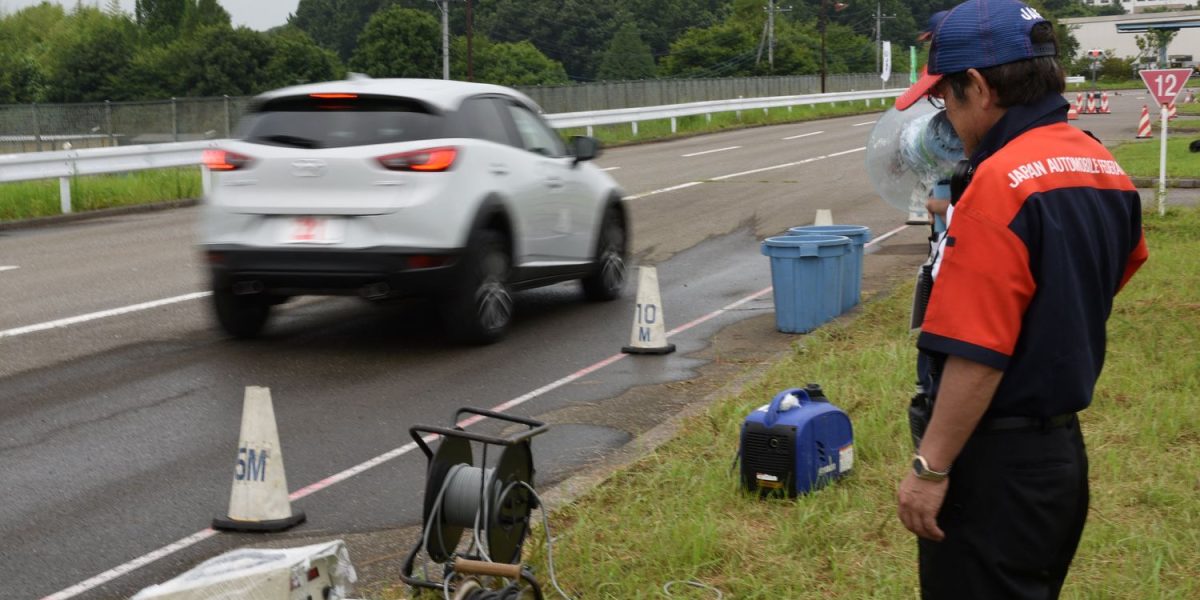
Beyond the cognitive screening, drivers who have committed a traffic offence in the previous three years — speeding, failing to yield or running a red light — must also retake a short practical driving test. They perform manoeuvres on a closed course, with points awarded for each. If a driver fails to score enough points, the licence is withdrawn.
These controls will become stricter from 2027. An elderly person who, for example, botches a reverse turn will lose their licence.
Broad Public Acceptance
The tightening of the rules is generally well received in Japan, even though hundreds of thousands of seniors are likely to lose their licences in the coming years. Currently, nine out of ten drivers over 75 pass the practical tests. Early experience suggests that under the new rules, that figure will fall to eight in ten.