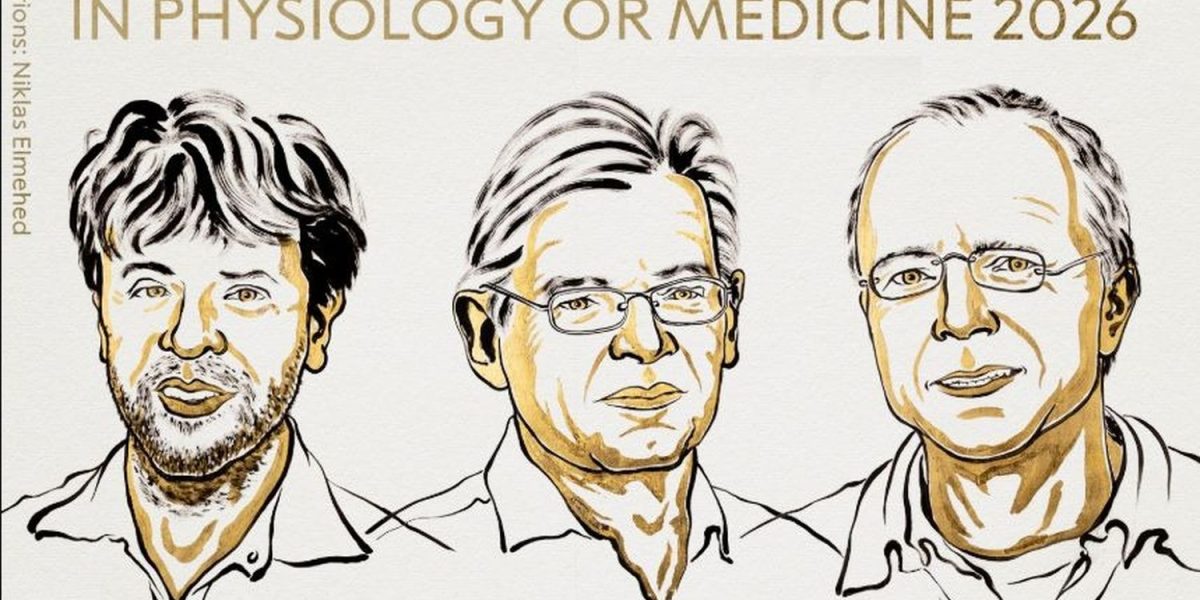
The 2026 Nobel Prize in Physiology or Medicine has been awarded to American researcher Karl Deisseroth and German scientists Peter Hegemann and Georg Nagel for their pioneering discoveries concerning light-gated ion channels and optogenetics, the Karolinska Institute announced on Monday, October 5.
The Nobel Committee recognized the three researchers for work that “laid the foundations of a new era in neuroscience.” Their discoveries have revolutionized the ability of scientists to study how nerve cells function in the living brain.
A Revolutionary Method for Brain Research
Optogenetics, the technique developed through their combined research, “makes it possible to demonstrate how nerve cells shape memories, emotions, and behaviors in the living brain,” according to the Nobel Committee’s citation.
The method works by using light to control the activity of individual neurons with unprecedented precision, allowing researchers to observe and manipulate brain circuits in real time.
From Algae to Brain Control
The scientific journey began when German researchers Peter Hegemann and Georg Nagel discovered a protein called channelrhodopsin in a single-celled alga. This light-sensitive protein naturally functions as an ion channel that opens in response to light.
American researcher Karl Deisseroth then transformed this protein into a controllable light switch for nerve cells, creating the foundation for optogenetics as a practical research tool.
Per Svenningsson, chairman of the Nobel Committee for Physiology or Medicine, commented on the significance of the achievement: “Optogenetics offers the possibility to map the brain in a way we could once only dream of.”
Implications for Neuroscience
The technique has become an essential tool in neuroscience research worldwide, enabling scientists to:
- Identify specific neural circuits responsible for particular behaviors
- Study the mechanisms underlying memory formation and recall
- Investigate how emotional responses are generated and regulated
- Develop potential new approaches for treating neurological and psychiatric disorders
The recognition of these three researchers highlights the growing importance of innovative technologies in advancing our understanding of the human brain and its complex functions.