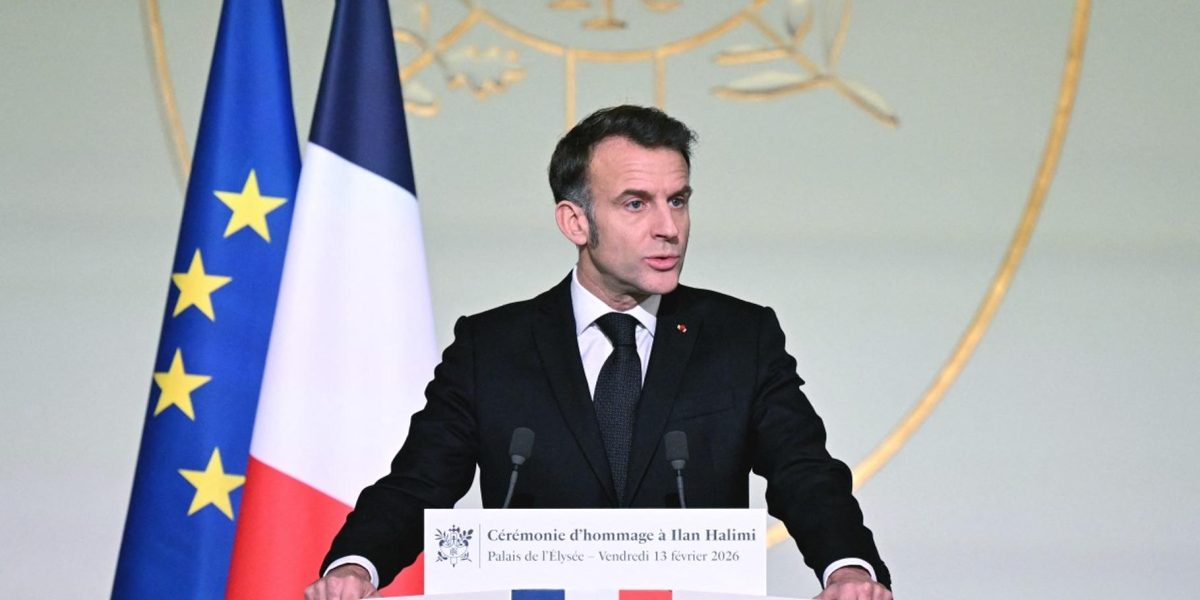
At the Munich Security Conference, French President Emmanuel Macron delivered a robust defense of the European project, urging the world to view the continent as an “example” rather than a target for criticism or caricature. His speech on Friday served as a direct counterpoint to the sharp critique leveled by U.S. Vice President JD Vance at the same forum one year prior.
A Rebuttal to “Vilification”
In a lengthy address, Macron denounced narratives that paint Europe as a fading, slow, and fragmented entity. He specifically pushed back against portrayals of a overregulated economy averse to innovation and a society corrupted by “barbaric migrations.”
“And, more curiously still, in some circles, as a repressive continent where speech would not be free and where alternative facts could not claim the same right as truth itself—that outdated and cumbersome concept,” the French president continued, before asserting, “we must be proud of Europe.”
Asserting European Strength and Partnership
Macron argued for Europe’s inherent strength and potential for further reinforcement. “I think Europe is intrinsically strong, and it can be strengthened further,” he stated, positioning a resilient Europe as “a better friend for our allies, notably the United States.”
Responding to Vance’s 2025 Warnings
The speech was a clear response to Vice President JD Vance’s address in 2025. At that time, Vance expressed that his primary concern was not Russia or China, but “the threat from within, the retreat of Europe from some of its most fundamental values, values shared with the United States of America.”
Vance, who emphasizes his Christian faith, also criticized allies like the United Kingdom over what he called a “regression of rights of conscience,” alleging attacks on the fundamental freedoms of religious Britons. He further argued that democracies are strengthened by allowing citizens to express their opinions, criticizing the conference for barring populist party officials.
A Widening Transatlantic Divide
Since the return of Donald Trump to the White House a year ago, the administration’s critical stances toward Europe have multiplied. Analysts observe that tensions between Brussels and Washington have evolved from diplomatic disagreements into a deeper ideological and strategic rift, marking a significant shift in the transatlantic relationship.