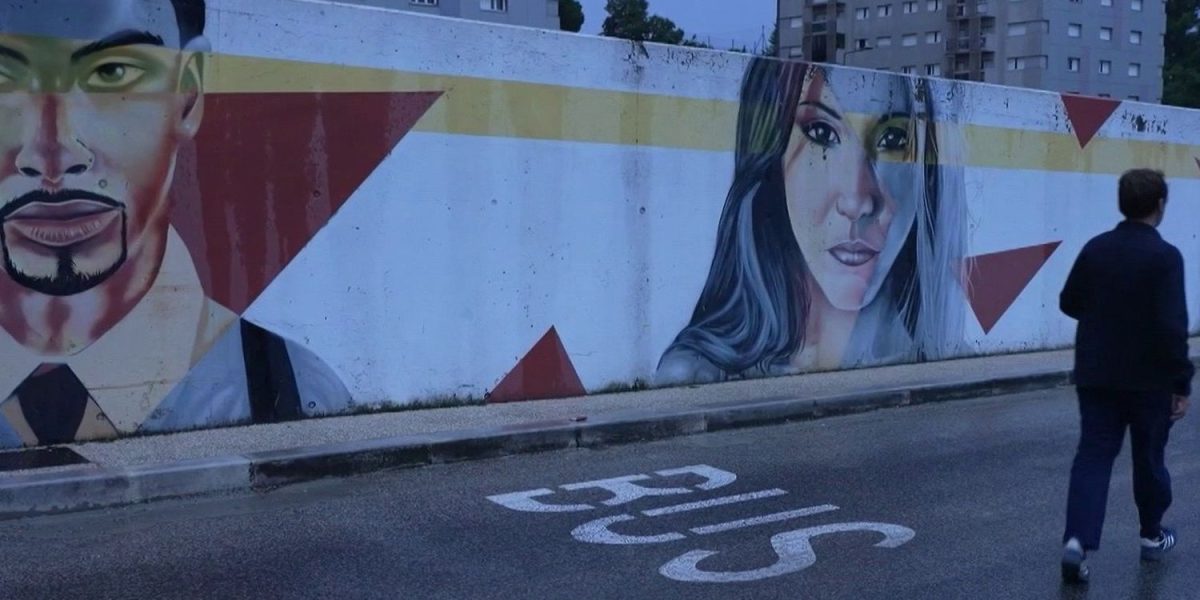
For more than a decade, Mohammed Benmeddour has walked the streets of Marseille’s northern neighborhoods as a mediator and youth educator, engaging with young people, older residents, and even drug traffickers. French television journalist Tristan Waleckx and a France Télévisions crew accompanied him for 48 hours, gaining rare access to the daily lives of residents determined to defend a different image of their communities.
Because the northern districts of the Phocean city cannot be reduced to drugs and gangland killings alone.
A Community Scarred by Violence
Mohammed guides the team toward the Cité des Marronniers. The educator is a well-known figure in the local nonprofit world.
“The housing estate became tragically famous on August 18, 2021, when young Rayanne was killed with a Kalashnikov at the age of 14. It happened right down there,” Mohammed recounts, noting that the boy had gone to get a sandwich with friends.
“It’s blind violence. He was in the wrong place at the wrong time,” Mohammed says with regret.
Rejecting the ‘No-Go Zone’ Label
But Mohammed disagrees with those who describe the northern districts as lawless territory. “The police operate in every neighborhood,” he emphasizes.
The current drug trade “took hold in the 1990s. Over time, with misery and the abandonment of public services, the drug trade flourished,” he explains.
According to police figures, drug trafficking in Marseille generates up to one million euros in revenue per day.
A Mother’s Fear for Her Children
The team then meets Fadela Ouidef, a community activist and district councillor, in the Busserine neighborhood, where 96% of housing is social housing. She is raising her four children alone and has lived for 17 years on the third floor of a tower block beside the ring road.
She confides that she fears for her children: “Young people in working-class neighborhoods are not allowed to make mistakes.”
An Image Worth Defending
Despite the challenges, residents like Mohammed and Fadela remain committed to their communities. Their testimony offers a counter-narrative to the stigmatization of Marseille’s northern districts — one of resilience, solidarity, and a determination to reclaim their neighborhoods’ reputation.