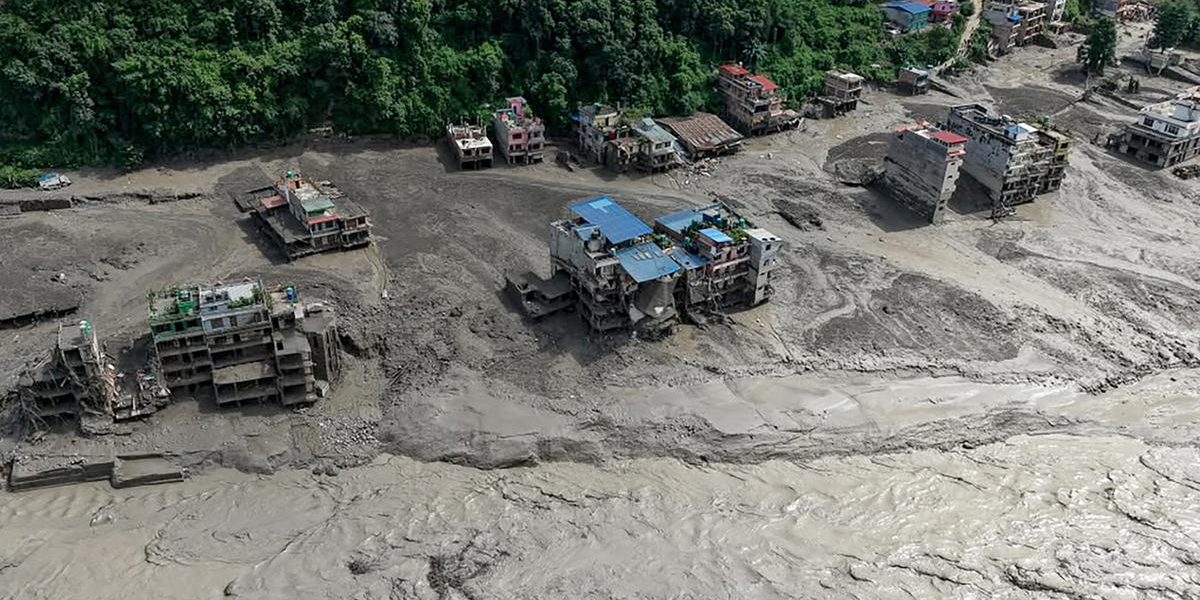
A devastating mudslide struck a remote Himalayan border crossing between Nepal and Tibet on Wednesday morning, killing at least 19 people and leaving 384 tourists unaccounted for, according to local authorities and state media reports. The disaster has triggered a massive search-and-rescue operation involving the Nepalese army and helicopters, while Chinese President Xi Jinping has ordered “all means” be mobilized to save lives.
Scale of the Disaster Emerges
The torrent of muddy water and debris hit the Gyirong border post around 10:30 a.m. local time (02:30 GMT), a critical land crossing between China and Nepal. Nepalese officials confirmed at least 19 fatalities, while the army reported rescuing 21 people so far. However, the fate of 384 tourists remains unknown — a group comprising 291 foreign nationals and 93 Nepalese citizens.
“The floods are massive and likely to have affected many inhabited areas,” a local official told AFP, noting that damage assessments were still underway. Nepal’s Prime Minister Balendra Shah said on social media that he had convened an emergency meeting of the National Disaster Management Authority.
Cause Linked to Glacial Avalanche
Scientists believe the flooding was triggered by an ice avalanche that fell into the Lhende River, creating a natural dam that eventually gave way. Qianggong Zhang, a researcher at the International Centre for Integrated Mountain Development (ICIMOD) in Kathmandu, cautioned that the blockage caused by the avalanche remains in place, warning that “a second flood could therefore occur.”
The Gyirong area sits in the high Himalayas and is regularly prone to landslides and flash floods during the summer monsoon season. The exact cause of the avalanche-triggered flood is still under investigation.
High-Level Response from Beijing
Chinese state media reported “numerous casualties” on the Tibetan side of the border, prompting an unusually swift response from President Xi Jinping. He ordered the “mobilization of all means to search for and rescue the missing, evacuate and relocate residents in danger, treat the injured quickly, and minimize the number of victims.”
Xi’s direct intervention is significant; the Chinese leader typically comments publicly only after disasters with substantial human tolls. The border post at Gyirong is one of the most important overland trade routes between China and Nepal, making the disruption both a humanitarian and economic concern.
Rescue Operations Underway
The Nepalese army has deployed significant resources, including multiple helicopters, to reach affected areas. The challenging mountainous terrain and ongoing risk of secondary floods are complicating rescue efforts. Authorities have not yet released a breakdown of the nationalities of the missing foreign tourists, but the region is a popular trekking and overland travel corridor for international visitors.
As search teams race against time, the full extent of the tragedy may take days to emerge. The combination of glacial hazards, monsoon rains, and remote geography underscores the growing vulnerability of Himalayan communities and travelers to climate-related disasters.