Pakistan has dramatically accelerated its diplomatic mediation between Washington and Tehran, dispatching its most senior military commander to Iran for urgent consultations aimed at preventing the collapse of fragile peace negotiations and averting a wider regional war.
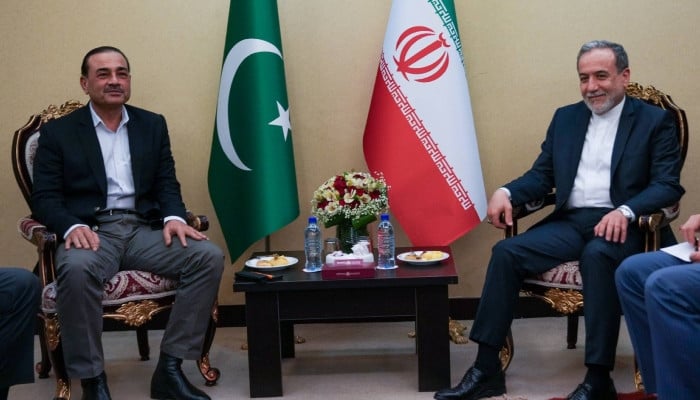
Chief of Army Staff and Chief of Defence Forces Field Marshal Syed Asim Munir held extensive talks with Iranian Foreign Minister Abbas Araghchi in Tehran late Friday night. The meeting focused squarely on diplomatic initiatives designed to halt the ongoing US-Israel military campaign against Iran and restore stability to West Asia.
Direct Engagement with Iran’s Top Brass
The meeting, confirmed by the Iranian government, underscored the gravity of the situation. “Field Marshal Asim Munir met FM in Tehran to discuss diplomatic efforts aimed at preventing further escalation and promoting peace, stability, and security in West Asia,” an official statement read.
Beyond the foreign minister, Field Marshal Munir held separate, high-level meetings with Iranian President Masoud Pezeshkian and Parliament Speaker Mohammad Bagher Ghalibaf. The flurry of diplomatic activity signals Pakistan’s determination to bridge the widening gap between the two adversaries after a planned second round of direct talks in Islamabad failed to materialize.
The first direct US-Iran negotiations, hosted in Islamabad on April 11 and 12 following a Pakistan-brokered ceasefire on April 8, concluded without a breakthrough. While the dialogue did not officially collapse, no agreement was reached, leaving the process in a precarious state.
Tehran Accuses Washington of ‘Excessive Demands’
As Pakistan’s mediation push intensifies, Iran has sharpened its rhetoric against the United States. Iranian state media reported on Saturday that Tehran accused Washington of making “excessive demands,” a stance that is complicating efforts to finalize a peace proposal currently under review by the Islamic Republic’s leadership.
Foreign Minister Araghchi, in a phone call with UN Secretary-General Antonio Guterres, asserted that Iran remains engaged in the diplomatic. However, he condemned what he described as the “repeated betrayals of diplomacy and military aggression against Iran, along with contradictory positions and repeated excessive demands by the United States.
The diplomatic tightrope walk comes amid heightened fears of renewed military action. US President Donald Trump has characterized the stop-start negotiations as being on the “borderline” between a deal and fresh strikes. US media outlets, including Axios and CBS News, have reported that the White House is actively considering new strikes on Iran, though a final decision has reportedly not been made.
The Shadow Over the Strait of Hormuz
A critical sticking point in the negotiations remains the of the Strait of Hormuz, the vital maritime chokepoint for global oil supplies. The conflict, which began with US-Israeli strikes on February 28, has seen competing blockades that have roiled the global economy.
Iranian foreign ministry spokesman Esmaeil Baqaei confirmed that the status of the strait and a retaliatory US blockade of Iranian ports were key topics under discussion. US Secretary of State Marco Rubio acknowledged “some progress” towards a peaceful resolution but warned that “things were not there yet.” He reiterated President Trump’s position that other options remain on the table, stating, “We’re dealing with a very difficult group of people.”
With pre-war oil stockpiles dwindling, the international community is watching anxiously as Pakistan leverages its unique relationships with both nations to prevent a catastrophic breakdown in diplomacy. The outcome of Field Marshal Munir’s Tehran mission may well determine whether the region steps back from the brink.