A Stark Diagnosis and a Funding Promise
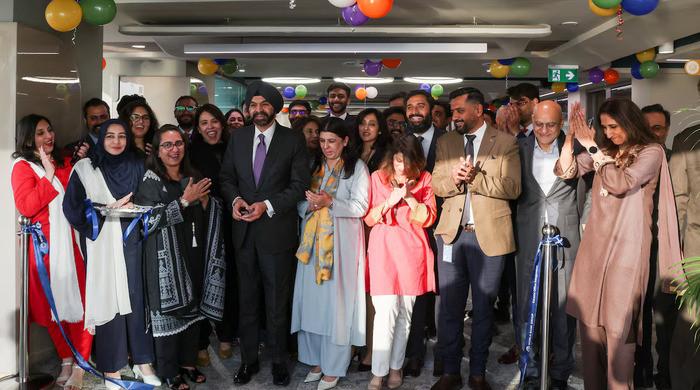
World Bank President Ajay Banga has issued a stark warning to Pakistan: the country must create 25 to 30 million jobs over the next decade. This statement, made during his recent visit, goes beyond a simple headline figure. It identifies the nation’s most critical economic constraint. Banga’s insistence that job creation must become the central “north star” of all policy is a correct and long-overdue assessment.
Accompanying this diagnosis is a financial commitment. The World Bank’s new Country Partnership Framework envisions approximately $4 billion per year in support, with a stronger emphasis on tangible outcomes and mobilizing the private sector.
The Core Contradiction: Stabilization vs. Transformation
However, diagnosis and funding are merely the starting point. The more difficult, and persistently avoided, question remains: how will these jobs be created when the World Bank itself states that Pakistan’s growth model is broken? The current macroeconomic framework, largely designed to balance fiscal books through agreements with the IMF, is not built to foster an economy capable of mass employment.
This presents a fundamental contradiction. Without confronting it, Pakistan risks repeating a familiar, damaging cycle: new external finance is absorbed by an unchanged system, leading to rising debt, superficial “stability” in headline indicators, and a widening gap between economic statistics and the lived reality of unemployment and poverty.
A Structural Failure, Not a Cyclical Slowdown
The World Bank’s analysis is unambiguous. Pakistan’s economy suffers from deep structural issues:
- Exports are disproportionately small for a population exceeding 250 million.
- Businesses face high and volatile energy costs, excessive taxation, and unpredictable regulation.
- Productivity growth is anaemic, and private investment remains chronically low.
- The environment stifles new firm entry and scaling.
This is not a temporary downturn awaiting restored confidence. It is a systemic failure. Yet, policy responses continue to assume growth will automatically return once short-term macroeconomic “stability” is achieved—a strategy that has repeatedly failed to deliver durable stability or sustained growth.
Governance Failure: Wasting Scarce Resources
A critical barrier is governance. While funding constraints are real, the more uncomfortable truth is that mobilized funds are often wasted. Fragmented programs, politicized allocation, weak execution, and a near-total absence of accountability turn scarce resources into activities, not outcomes.
This results in infrastructure that fails to generate productivity, exports, or employment. As noted by Planning Minister Ahsan Iqbal, Pakistan suffers from a severe “coordination deficit,” where every rupee in an uncoordinated system risks duplication, leakage, or capture.
Incentives Designed for Control, Not Outcomes
The deeper problem lies in incentive design. The state apparatus is organized around inputs, approvals, and control—not measurable outcomes like job creation or export expansion. Budgets define spending, not impact. Federal and provincial planning are poorly aligned, often working at cross-purposes.
This is compounded by a two-tier economy that rewards incumbency. Powerful political actors and protected firms survive behind tariffs, discretionary subsidies, and regulatory barriers. This creates vested interests that effectively resist reform, resulting in higher prices for consumers and fewer opportunities for workers.
The Path Forward: A Choice Between Decline and Redesign
Pakistan now faces a stark choice. It can continue to manage economic decline through accounting optics and protect the status quo. Alternatively, it can undertake the hard work of redesigning its political-economic architecture to reward productivity, competitiveness, and enterprise.
An economy cannot generate three million jobs annually while capital is crowded out by government borrowing, firms are taxed into retreat, and policy uncertainty raises risks beyond viability. A broken model cannot be repaired by applying greater force to the same failed levers.
President Banga is correct that the World Bank is “in the business of hope.” But hope alone will not create 30 million jobs. Confronting the disconnect between growth diagnostics and contractionary macroeconomic policy is the essential first step if Pakistan is to build a future of mass, productive employment.