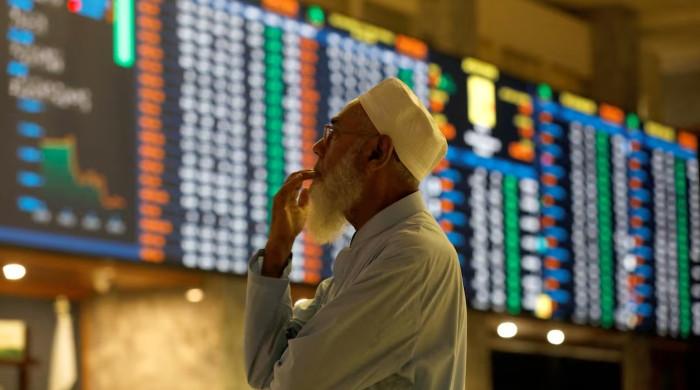
Market Retreats After Sharp Rebound
The Pakistan Stock Exchange (PSX) witnessed a significant downturn on Thursday, with the benchmark KSE-100 Index closing at 172,170.29 points. This represents a sharp decline of 6,682.80 points, or 3.74%, from the previous session’s close of 178,853.09 points. The sell-off followed a strong rebound on Wednesday, with analysts pointing to profit-taking and fragile investor sentiment.
Key Factors Behind the Sell-Off
Market experts attributed the bearish trend to two primary factors. “Continuous foreign selling and weak corporate results” were cited by Mohammed Sohail, CEO of Topline Securities, as the main drivers. The trading session, which coincided with the first day of Ramadan, also saw notably lower volumes and participation.
“Today the volumes are lacklustre due to the 1st Ramadan day and generally lower activity. The sharp rise yesterday is seeing some profit taking today and likely to continue depending on the quality of results,” said AAH Soomro, an independent investment and economic analyst.
Intraday Volatility and Broader Economic Context
The index experienced high volatility, hitting an intraday high of 179,279.74 points before plunging to a low of 171,647.33 points. The downturn occurs amidst mixed economic signals. Recent data shows Foreign Direct Investment (FDI) for the first seven months of FY26 fell 41% year-on-year to $981.4 million, although January saw a net inflow of $173 million.
Meanwhile, the State Bank of Pakistan kept its benchmark policy rate unchanged at 10.5% last month, with inflation edging up to 5.8% in January from 5.6% in December.
Sectoral and Foreign Investment Trends
A breakdown of FDI data reveals sector-specific challenges:
- China remained the largest investor, though its net investment declined to $495.5 million from $857.1 million a year earlier.
- The power sector saw inflows fall to $541.8 million from $890.3 million.
- The telecom sector posted significant outflows of $442.7 million.
- Financial businesses attracted $460 million, up from $432.4 million.
The market’s performance will be closely watched in the coming sessions as investors assess corporate earnings and broader economic indicators during the Ramadan period.