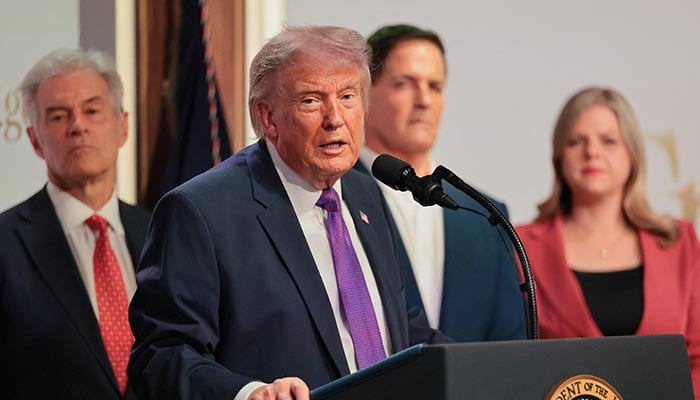
WASHINGTON — President Donald Trump disclosed on Monday that he was prepared to launch a large-scale military attack on Iran on Tuesday but decided to hold off after appeals from Gulf Arab allies who indicated a diplomatic breakthrough might be near.
In a series of statements, the president confirmed the existence of an advanced attack plan while simultaneously striking an unusually optimistic tone about the prospects for a negotiated settlement to the ongoing conflict.
Gulf Leaders Intervene to Pause Military Action
Trump stated that the leaders of Qatar, Saudi Arabia, and the United Arab Emirates directly requested he postpone the strike. “They asked me to hold off on our planned Military attack of the Islamic Republic of Iran, which was scheduled for tomorrow, in that serious negotiations are now taking place,” Trump wrote on his Truth Social platform.
Despite the delay, the president issued a stark warning, emphasizing that he has instructed the U.S. military to remain poised for an overwhelming response. He said forces are ready to execute a “full, large scale assault of Iran, on a moment’s notice, in the event that an acceptable Deal is not reached.”
A ‘Very Positive Development’ in Negotiations
Speaking later at a White House event, Trump described a “very positive development,” relaying that Arab allies believe a deal is close that would ensure Iran is left without nuclear weapons. Tehran has consistently denied pursuing such capabilities.
“There seems to be a very good chance that they can work something out. If we can do that without bombing the hell out of them, I’d be very happy,” Trump remarked.
The diplomatic maneuvering comes against a backdrop of severe regional tension. Iran has exerted control over the Strait of Hormuz, a critical artery for global energy supplies, causing a spike in international oil prices. Iranian Foreign Ministry spokesman Esmaeil Baqaei confirmed that exchanges with Washington are ongoing through Pakistani mediators, noting that Tehran has clearly communicated its “concerns.”
Negotiation Details and Sticking Points
According to Iran’s Fars news agency, Washington has presented a five-point proposal. The reported demands include Iran limiting its nuclear program to a single operational site and transferring its stockpile of highly enriched uranium to the United States. The agency indicated that U.S. authorities have so far refused to release frozen Iranian assets or pay reparations for war damage.
However, Iran’s Tasnim news agency cited a source close to the negotiating team who suggested a potential breakthrough, claiming the latest U.S. text includes an agreement to waive oil sanctions during the negotiation period.
Iranian President Masoud Pezeshkian, navigating a political landscape increasingly dominated by the hardline Revolutionary Guards, stated that dialogue with Washington “does not mean surrender” and vowed that Iran would defend its dignity and rights. Earlier Iranian proposals had called for a comprehensive end to hostilities across all fronts, including Israel’s campaign in Lebanon, and a halt to the U.S. naval blockade on Iranian ports.
Strait of Hormuz Tensions Intensify
As diplomatic talks teeter on the edge, Iran is moving to solidify its grip on the strategically vital Strait of Hormuz. On Monday, the newly established Persian Gulf Strait Authority announced it would provide “real-time updates” on waterway traffic via social media. The Revolutionary Guards further warned that internet fiber optic cables passing through the strait could soon be subject to an Iranian permit system, signaling a deepening of Tehran’s control over the maritime chokepoint.
In a related move aimed at stabilizing volatile energy markets, the U.S. Treasury extended a sanctions waiver for Russian oil cargoes already at sea by 30 days, continuing a trend of easing pressure on Moscow amid the broader geopolitical crisis.