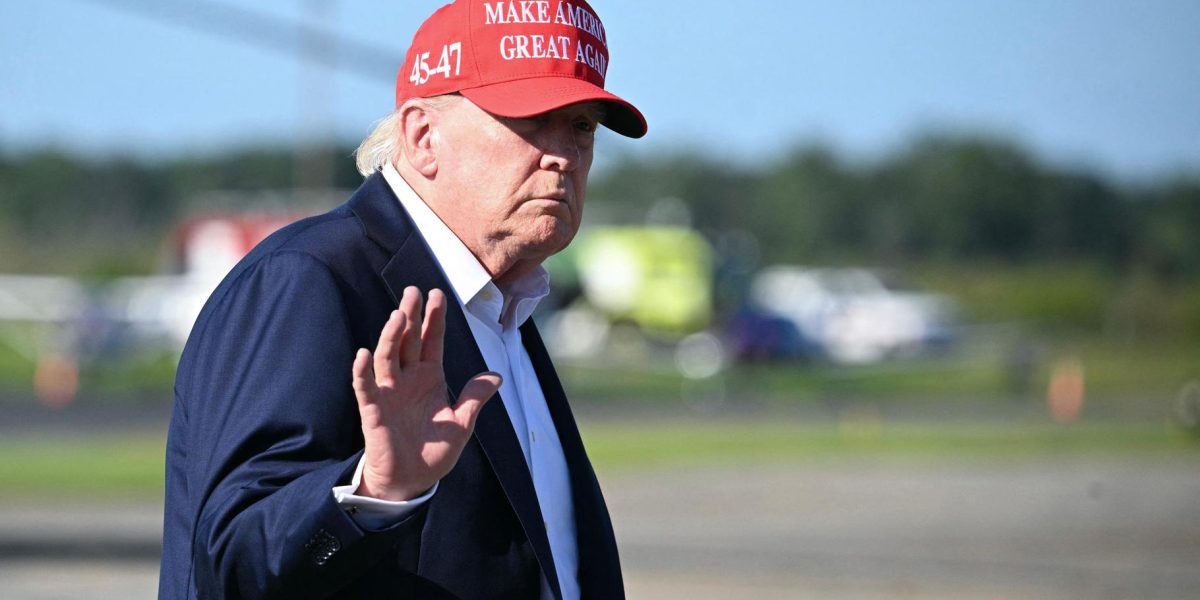
Donald Trump has threatened to impose “very heavy tariffs” or halt “all trade with Europe” if Canada becomes an associate member of the European Union, escalating tensions over a proposal floated by European Commission President Ursula von der Leyen.
A Proposal That Rattled Washington
Von der Leyen made the proposal during a speech to the European Parliament on Wednesday, with Canadian Prime Minister Mark Carney in attendance. Carney is scheduled to address European lawmakers on Thursday. She also suggested that Canada join the future “European Security Council,” a body she has championed.
“I think it’s ridiculous,” Trump told journalists when asked about the European Commission’s proposal, despite having repeatedly stated his desire to make Canada the “51st American state.”
“If they do that, if I deem it a hostile act, I will impose very heavy tariffs or I will cease all trade with Europe,” the U.S. president added, continuing his pattern of criticizing the European Union, particularly on trade matters.
Canada and Europe Seek New Partnerships
The proposal comes as Canada, embroiled in a trade war with the Trump administration, searches for new partners. Europe, whose relations with Washington are equally turbulent, is seeking allies for its strategy of rebalancing between the two superpowers, China and the United States.
“We see the world with the same eyes: from AI to climate change, from the Arctic to geopolitics,” von der Leyen said, calling on Ottawa and Brussels to “build” a “common future.”
“In a more dangerous and more divided world, Canada is forging closer ties with trusted partners,” Carney’s office said in a statement.
What Associate Membership Would Mean
The associate member status mentioned for Canada is not legally defined by EU treaties. However, Germany recently proposed that Ukraine benefit from such a status, suggesting the country could attend certain ministerial meetings or EU summits without holding voting rights.
In practical terms, Canada and the EU primarily intend to strengthen their partnership, spanning from artificial intelligence to energy. Buffeted by U.S. tariffs and Chinese competition, Brussels and Ottawa are looking to capitalize on an already considerable level of cooperation.
Trade between the EU and Canada has surged by 80% since 2016, following the implementation of a free trade agreement that eliminated nearly all tariffs. This year, Canada became the first non-EU country to join the European defense program Safe.
Room for Growth in Key Sectors
There remains room for improvement. Both parties will examine areas “where we have complementary capacities and needs” that are “strategically important” to “guarantee our sovereignty,” such as energy, AI, and critical raw materials including rare earths, Canadian Ambassador to Brussels Jonathan Wilkinson told AFP this week.