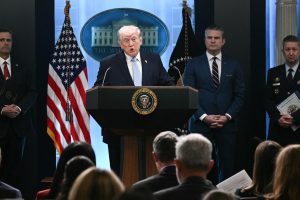
WASHINGTON — The United States is quietly advancing negotiations to enable Ukraine to manufacture components for advanced Patriot interceptor missiles, a critical capability Kyiv desperately needs to counter intensifying Russian ballistic missile barrages. The push persists even after President Donald Trump publicly cast doubt on the arrangement, according to four sources familiar with the discussions.
The talks, which include a scenario where Ukraine builds parts for final assembly elsewhere in Europe, underscore a behind-the-scenes effort to bolster Ukraine’s long-term air defense architecture despite mixed signals from the White House.
Kyiv’s Urgent Need for PAC-3 Interceptors
Ukraine has been urgently requesting more PAC-3 missiles, the most modern Patriot variant and one of the few weapons capable of intercepting the ballistic missiles Russia has been launching in growing volleys. The desperation was laid bare on Saturday when Ukrainian President Volodymyr Zelenskiy warned that his country had exhausted its Patriot interceptor stockpile, managing to down only one of 27 ballistic missiles fired by Moscow that day.
During a meeting with Zelenskiy in Ankara, Turkey, last month, Trump indicated the U.S. would grant Ukraine a license to manufacture PAC-3s, a significant potential boost for Kyiv. However, last week, Trump appeared to reverse course following what two sources described as a challenging White House meeting with Zelenskiy. The president told reporters that the U.S. had not agreed to let Ukraine build Patriot missiles and that America must be “very careful about letting somebody build them.”
Whitaker Leads Quiet Diplomatic Push
Despite the president’s public skepticism, the initiative is being actively managed by Washington’s envoy to NATO, Matthew Whitaker. He traveled to Kyiv last month to explore options with Ukrainian officials and weapons industry executives, the four sources said.
“No order was given to halt the discussions,” one source stated, confirming that talks are ongoing with U.S. arms makers, military officials, and other stakeholders. The White House declined to comment on the matter.
Whitaker’s spokesperson said the Kyiv visit was to “explore collaboration opportunities on battlefield innovations, such as drones, which will benefit the U.S. warfighter,” without specifically mentioning the Patriot initiative. A senior Trump administration official added that the U.S. is “exploring several potential pathways for future defense industrial cooperation with Ukraine,” emphasizing that any agreement must prioritize the security of U.S. technology.
Three Pathways Under Consideration
The sources, who requested anonymity to discuss internal deliberations, outlined three main options on the table:
- Component Manufacturing and German Assembly: Building Patriot components in Ukraine and shipping them to Germany for final assembly. An older Patriot model is already produced in Germany, and advanced PAC-3 is expected to be manufactured there as well. A U.S. official called this the most feasible path.
- Integration into Existing Programs: Adding Ukraine to an existing U.S.-European Patriot interceptor production program.
- Lower-Cost Variant: Allowing Kyiv to build a cheaper version of the PAC-3, potentially joining Lockheed Martin’s newly announced PAC-3 Adapted Capability Effector (ACE) missile program.
Long Road to Production Amid Immediate Crisis
Even if a production agreement is secured swiftly, Ukraine would not start receiving new missiles for at least a year, and likely much longer. U.S. officials cautioned that opening new component lines is a complex process, with production typically not starting until three to seven years after a licensing deal is signed. This timeline forces Kyiv to continue urging allies to transfer existing interceptors to meet immediate battlefield needs.
Ukraine’s former ambassador to the U.S., Olha Stefanishyna, said last week that Kyiv was also exploring long-term purchase agreements for PAC-3 interceptors and swapping deliveries with other countries to get them sooner. She noted that Lockheed Martin was fully engaged and working to send a team to Ukraine soon. Lockheed Martin did not reply to a request for comment.
Zelenskiy underscored the existential need for self-defense in a subsequent phone call with U.S. Vice President JD Vance, who reassured him that agreements between presidents would be honored, one source said. The broader context, officials note, is that licensing U.S. weapons production in Europe has been under active discussion since Russia’s 2022 invasion exposed critical gaps in European arsenals, and some deals have already been finalized.