FOC_KEYWORD: US-Iran peace deal
In a wave of international acclaim, world leaders on Monday welcomed a landmark peace agreement between the United States and Iran, framing the deal as a pivotal step toward ending a devastating conflict and restoring stability to the Middle East. The diplomatic breakthrough, facilitated through intensive mediation, drew widespread praise for the role played by Pakistan in bridging the divide between the two long-time adversaries.
The framework agreement, announced late Sunday, commits both nations to an immediate and permanent ceasefire, an end to the US blockade, and the critical reopening of the Strait of Hormuz—a vital artery for global energy supplies. A formal memorandum of understanding is scheduled to be signed in Switzerland on Friday.
A Chorus of Global Approval
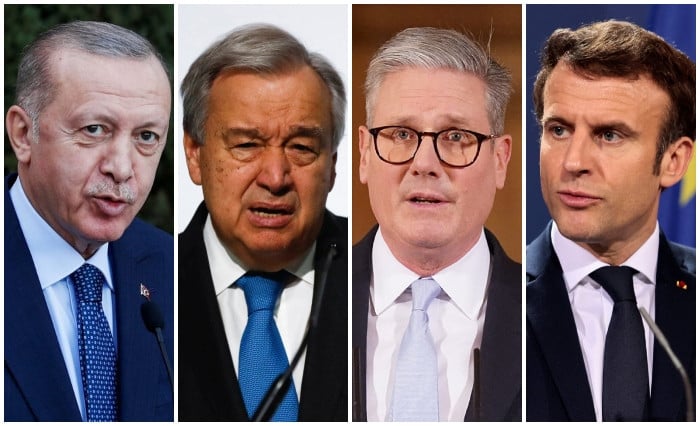
United Nations Secretary-General Antonio Guterres was among the first to respond, describing the accord as a major stride toward a peaceful settlement. He congratulated Washington and Tehran and expressed deep appreciation for a coalition of mediating nations.
“The Secretary-General welcomes the US-Iran peace deal as a major step towards ending the conflict and achieving a peaceful settlement,” a UN statement read, specifically commending the constructive roles of Pakistan, Qatar, Egypt, Saudi Arabia, and Turkiye.
Turkiye’s President Recep Tayyip Erdogan echoed this sentiment, calling the agreement a significant development for regional peace. In a post on X, he extended special thanks to Pakistan for its “exceptional mediation efforts,” while also acknowledging the diplomatic support from Qatar and Saudi Arabia.
Western Powers Signal Sanctions Relief
The breakthrough was met with strong support from European capitals, with leaders signaling a readiness to match diplomatic progress with economic incentives. British Prime Minister Keir Starmer hailed the deal as a “hugely important step forward,” directly thanking the mediators from Pakistan and Qatar.
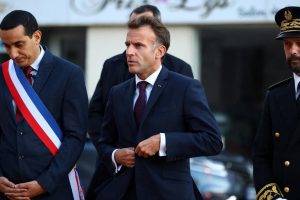
French President Emmanuel Macron called for the swift and full implementation of the pact, emphasizing that the agreement “must allow for the urgent and unconditional reopening of the Strait of Hormuz.”
In a significant joint statement, the E4 nations—the United Kingdom, France, Germany, and Italy—announced they were prepared to lift sanctions on Iran in response to verifiable steps on its nuclear program. “Iran must never acquire a nuclear weapon. We stand ready to work with the US, Iran and the IAEA to this end,” the leaders declared.
Pacific Nations and Mediators React
The diplomatic ripple effects extended to the Asia-Pacific, where Australian Prime Minister Anthony Albanese and Japanese Prime Minister Sanae Takaichi lauded the cessation of hostilities. Japan strongly hoped for the ensured free and safe navigation through the Strait of Hormuz and commended the mediating countries.
Qatari Prime Minister Sheikh Mohammed bin Abdulrahman bin Jassim Al Thani, whose nation played a part in creating conducive conditions for talks, expressed gratitude to Pakistan and other parties for their instrumental role in enabling the understanding.
The formal signing ceremony in Switzerland this week is expected to initiate a new phase of negotiations aimed at a final, comprehensive settlement, with the global community watching closely to ensure the fragile peace holds.