Diplomatic efforts to de-escalate the US-Iran conflict intensified Wednesday, with President Donald Trump signaling he is in no hurry to end the military campaign while Pakistan prepared to host a crucial second round of negotiations. The developments came as the United Nations issued a dire warning that the ongoing blockade of the Strait of Hormuz could trigger a severe global food price crisis.
Trump: “Let’s See What Happens”
Speaking at a commencement address at the US Coast Guard Academy, President Trump declared that Iran’s conventional military capabilities had been largely neutralized. “Everything’s gone. Their navy’s gone. Their air force is gone. Just about everything,” Trump said. “The only question is, do we go and finish it up? Are they going to be signing a document? Let’s see what happens.”
Earlier in the day, Trump told reporters he was not constrained by timelines, emphasizing that achieving mission objectives took precedence over a swift conclusion to the conflict. The remarks underscore a dual-track approach of maintaining maximum military pressure while leaving the diplomatic door ajar.
Islamabad Set to Host Second Round of US-Iran Talks
Behind the scenes, diplomatic machinery is accelerating. According to reports from Al Arabiya and Al Hadath, work is underway to finalize the text of an agreement between Washington and Tehran. Sources indicated that the final version could be announced within hours, with a new round of negotiations scheduled to take place in Islamabad following the Hajj season.
Saudi Arabia’s Foreign Minister Prince Faisal bin Farhan welcomed Trump’s decision to give negotiations additional time. The kingdom, along with the UAE and Qatar, had reportedly urged the US president to postpone a planned strike to allow diplomacy more room to maneuver.
Pakistan’s Shuttle Diplomacy Intensifies
Pakistan’s Interior Minister Mohsin Naqvi made his second visit to Tehran in less than a week, holding high-stakes meetings with Iran’s civil and military leadership. Naqvi met with his Iranian counterpart Eskandar Momeni and held a significant meeting with IRGC Commander-in-Chief General Ahmad Vahidi. The back-to-back visits highlight Islamabad’s central role as a mediator between the two adversaries.
Hormuz Blockade Stokes Global Food Crisis Fears
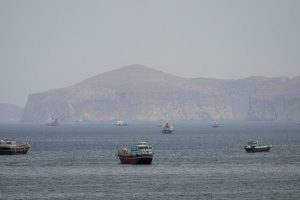
As diplomatic signals flicker, the economic fallout from the conflict is mounting. The UN Food and Agriculture Organization (FAO) warned that the effective closure of the Strait of Hormuz could “trigger a severe global food price crisis” in the coming months. Before the outbreak of hostilities, the strait accounted for a fifth of global oil shipping and a third of the world’s fertilizer supply.
The FAO urged greater focus on alternative land and sea routes, including corridors across the Arabian Peninsula to the Red Sea, and called on nations to refrain from imposing export restrictions on energy and fertilizers.
Contested Narratives on the Waterway
Iran’s Revolutionary Guards navy claimed that 26 vessels, including oil tankers and container ships, transited the strait in the past 24 hours under coordination with Iranian forces. The IRGC insisted that transit was ongoing with permits obtained directly from the force. The assertion stands in stark contrast to US Central Command, which released video footage showing the enforcement of a naval blockade against Iran, underscoring the contested nature of the critical waterway.
UN Secretary-General Antonio Guterres added his voice to the growing international concern, calling for the guaranteed freedom of navigation in the Strait of Hormuz to prevent a humanitarian and economic catastrophe.
Iran Vows “Unique” Resistance
Amid the flurry of diplomacy, hardline elements in Tehran struck a defiant tone. Mojtaba Khamenei, the son of Iran’s Supreme Leader, stated that Iran was putting up a “unique” resistance against the United States and Israel, signaling that the path to a lasting truce remains fraught with internal political pressures on both sides.